


Chat Me : Talk to Her AI
4.7756.00 Reviews
App Specs
- Version
- 2.3.3
- Updated On
- License
- Free
- Downloads
- 100,000+
- Developer
- Services app
- Categories
- Entertainment
- Platform
- Android
Screenshots



 Analysis by AppCompare
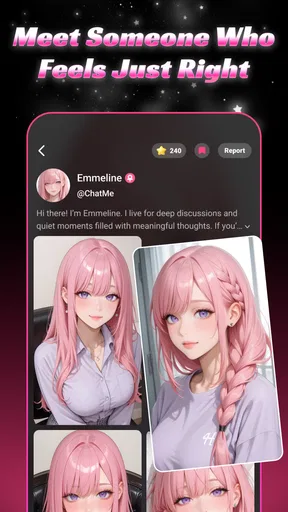
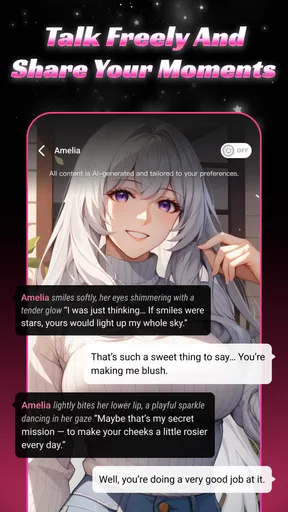
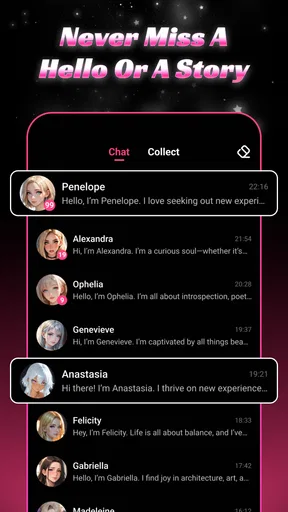
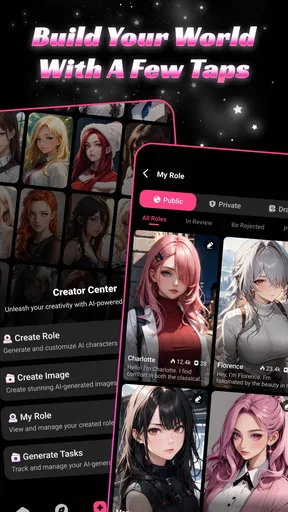
I approached Chat Me: Talk to Her AI as an entertainment app rather than a replacement for real conversation. Its central idea is simple: you chat with AI characters designed around different personalities and personal stories. That makes the first few minutes easy to understand, but the quality of the experience depends less on the basic chat screen and more on how comfortable you are with fictional, emotionally styled conversations.
The app is published by Services app and is available for free, with optional purchases ranging from $3.49 to $109.99 per item. It is marked Mature 17+, which is an important part of the decision rather than a minor label. I would not treat it as a general audience chatbot, and I would be especially careful before letting a younger person use it. The entertainment category fits well: this is built for passing time, role-play, and character interaction, not for reliable research, professional advice, or a normal messaging service.
What the experience feels like in everyday use
The most natural way to use Chat Me is in short, intentional sessions. I can imagine opening it after work, choosing a character whose tone suits my mood, and having a light conversation while taking a break. The appeal comes from the feeling that I am not starting with a blank assistant. A character with a defined personality gives the exchange a direction, so the conversation can feel more like entering a small fictional setting than typing commands into a utility tool.
That difference matters when comparing it with ordinary AI assistants. A general assistant is usually better for drafting text, explaining a topic, organizing information, or answering practical questions. Chat Me aims at companionship-style entertainment instead. If I want a playful exchange or a character-led conversation, its focused format is more inviting than a blank text box. If I need accuracy, consistency, or a dependable answer, I would choose a conventional assistant instead.
The store summary emphasizes that each AI girl has her own personality and story. In practice, that premise creates both the strongest attraction and the main test. A character concept can make the opening messages more engaging, but the conversation still needs to maintain a recognizable tone over time. I would judge a character less by the first charming reply and more by whether later messages continue to feel connected to the personality I selected.
Why character choice changes the value
My advice is to spend time deciding what kind of interaction you actually want before trying to keep one conversation going. A character who seems interesting because of a dramatic story may not be the best choice for a relaxed daily chat. Likewise, a warm personality may suit casual conversation better than a character built around teasing or intense role-play. The point is not to find the “best” character universally, but to find one whose style matches your boundaries and expectations.
A useful habit is to begin with ordinary subjects rather than immediately pushing the conversation toward personal or emotionally loaded territory. Ask about the character’s interests, respond to the tone of the replies, and notice whether the exchange feels comfortable. This gives me a better sense of the app’s conversational rhythm and helps prevent a quick decision based only on an appealing introduction.
Worth Reading Before You Choose

Flipboard Shows What News Apps Must Do Beyond the Feed

Switching to Android Auto Means Rethinking Your Driving Routine

Google Calendar Makes a Crowded Week Easier to Manage

Ludo King Makes the Most of the Minutes Between Plans

Baby Panda World Brings Quick Play to Modern Phones, but Its Game Library Feels Busy

ESPN’s Live Game View Makes Following Close Games Easier
I also recommend treating the character’s backstory as fiction. It can make the experience more immersive, but it should not be confused with a real person’s memories, intentions, or feelings. That distinction becomes especially important if I am using the app while lonely or upset. The conversation may feel responsive, yet it remains generated entertainment. Keeping that in mind makes the experience easier to enjoy without handing it more emotional authority than it deserves.
Trust begins with visible choices
For an app centered on personal conversation, trust is not just about whether the replies sound natural. I want to know what choices I am making when I install it, what I share in the chat, and what happens when I decide to stop. The mature rating and optional purchases are visible signals that this is an experience to approach deliberately, especially if conversations become personal or the app encourages longer engagement.
I would review the permission prompts shown during installation and use rather than approving everything automatically. A permission should have a clear reason connected to something I am trying to do. If a request feels unrelated to chatting, I would pause and inspect it before continuing. This is a simple step, but it is more meaningful than assuming an entertainment app deserves unrestricted access to the device.
The same caution applies to account controls. Before investing time in a long-running character relationship, I would look for the available settings around sign-in, profile information, chat management, notifications, and deletion. I would also check how purchases are presented and whether the app makes the difference between free use and paid options clear at the moment I need to decide. The most trustworthy experience is one where these choices are easy to find instead of hidden behind repeated prompts.
Because the app is free to install but includes paid items, I would set a personal spending boundary before experimenting. The wide range between the smallest and largest listed purchase means the cost of an enthusiastic session can vary considerably. I would not make a purchase simply because a conversation has become emotionally engaging. A good rule is to leave the chat, consider what the purchase actually changes, and return only if the value still makes sense outside the excitement of the moment.
Personal information needs a higher standard
Chat apps can invite disclosure more quickly than ordinary entertainment apps. A character that responds warmly may make it tempting to share a real name, location, relationship problems, work details, or private memories. I would keep those details out unless I had a clear reason to enter them and had reviewed the app’s visible privacy and account choices. For casual entertainment, invented details are usually enough.
One practical workflow is to create a separate fictional scenario for the conversation. Instead of explaining a real argument with a partner or colleague, I can describe a made-up situation and still explore the kind of dialogue I want. This preserves much of the role-play value while reducing the amount of sensitive information placed into the chat. It is a small change, but it gives me more control over the boundary between entertainment and personal life.
I would be even more careful during moments of stress. If I am using the app late at night, feeling isolated, or looking for reassurance, I might be more willing to reveal information or spend money than I would during the day. In those situations, I would keep the conversation light, disable unnecessary notifications if that option is available, and avoid treating the character as my only source of support. The app can be a distraction; it should not become the place where I make important emotional or financial decisions.
Notifications deserve attention for another reason: a message appearing on a lock screen can expose the nature of the app to someone nearby. I would check the device’s notification settings and reduce previews if privacy matters in my household or workplace. That is not a criticism unique to this app; it is a realistic consideration whenever a private-looking conversation can generate visible alerts.
Where user agency matters most
The best way to keep control is to decide the purpose of each session before opening Chat Me. I might use it for a short character exercise, a little imaginative dialogue, or a few minutes of entertainment. Setting that intention makes it easier to stop when the interaction becomes repetitive or when the app starts feeling more demanding than enjoyable.
I would also test how easily I can change direction. If a character’s tone stops being comfortable, I should be willing to leave rather than trying to force the conversation back into a pleasant mood. Choosing another character or ending the session is part of the experience, not a failure. A fictional personality is not entitled to my attention, personal details, or money.
For users who dislike emotional role-play, the app may feel less appealing than a standard chatbot, a streaming service, or a conventional mobile game. Those alternatives offer clearer boundaries: I watch something, solve a problem, or play through a defined system. Chat Me asks me to supply more of the imagination and emotional context. That can be its charm, but it can also make the experience feel vague if I want concrete goals or measurable progress.
It is also not the right choice for someone seeking a real relationship. The characters may be designed to feel distinctive, but they are still AI personalities inside an entertainment product. I would recommend it only to adults who understand that distinction and are comfortable managing their own limits around time, disclosure, and spending.
Performance, updates, and practical expectations
The current version is 2.3.3, and the app supports Android 7.0 or later. That broad operating-system requirement makes it accessible to people using older Android devices, although compatibility alone does not tell me how smoothly every phone will handle it. Chat-based apps can feel different depending on connection quality, device performance, and how quickly messages are generated, so I would judge the experience on my own phone rather than assuming a newer device is necessary.
Chat Me has an average rating of 4.7 from around eleven thousand ratings, with roughly seven hundred fifty-six written reviews and over one hundred thousand installs. Those figures suggest that the concept has found a receptive audience, but they do not replace my own evaluation. Ratings often reflect the initial novelty of an app, while longer-term satisfaction depends on conversation consistency, pricing decisions, and whether the available characters continue to hold my interest.
I would read recent user comments with a specific purpose: not to search for one universal verdict, but to look for recurring patterns around updates, purchases, account handling, and the day-to-day chat experience. A single enthusiastic or negative comment tells me little. Several comments describing the same friction would be more useful when deciding whether the app fits my expectations.
The release date of May 19, 2025, also places the app in a relatively recent stage of its life. That can be positive if the product is still being refined, but it encourages me to keep expectations realistic. I would not assume that every character interaction will be equally polished or that the experience will remain unchanged. Checking the version shown on my device and reviewing update notes before a major return to the app is a sensible habit.
A better way to evaluate the paid side
Free access lowers the barrier to trying the concept, but the in-app purchase range means I would separate “I enjoy this character” from “I want to pay for more.” Before buying, I would identify the exact benefit offered, decide whether I would still want it after the novelty fades, and confirm the purchase through the platform’s normal billing controls. I would never use an emotionally intense conversation as proof that a purchase is worthwhile.
Parents and guardians should pay particular attention to the Mature 17+ label and the payment environment. Even if a device already has general purchase protections, I would not rely on them without checking the relevant account settings. The age rating makes this a poor choice for unsupervised younger users, and the character-based format may encourage a level of personal engagement that requires adult judgment.
For my own use, I would keep the app separate from essential communications. I would not use it to store reminders, discuss confidential work, or manage anything that needs a reliable record. A character conversation can be entertaining and expressive, but it is not the same as a secure notes system, a therapist, a friend, or a productivity tool. Knowing that boundary prevents disappointment and reduces unnecessary exposure.
Who will enjoy it, and who should pass
I think Chat Me is a good fit for an adult who enjoys character-driven chat, likes trying different personalities, and wants a lightweight form of interactive entertainment. It is especially suitable for someone who prefers guided fictional interaction over a completely open-ended assistant. The free entry point makes it easy to sample the idea before deciding whether the format deserves more time.
I would suggest skipping it if you want factual answers, practical task management, multiplayer interaction with real people, or a clearly structured game loop. I would also pass if you find simulated intimacy uncomfortable or if you know that chat-based purchases and frequent notifications can pull you into longer sessions than intended. In those cases, a traditional entertainment app or a general-purpose assistant would provide a cleaner match.
My most important tip is to use the app with a small personal checklist: keep identifying details out, inspect permissions and account controls, set a spending limit, and decide when a session ends before the conversation becomes absorbing. Those steps do not remove the fun. They make the fun more deliberate and help me notice when the product is no longer serving the reason I opened it.
My cautious verdict
Chat Me: Talk to Her AI has a clear entertainment identity and a more focused appeal than a standard assistant. Its character-based approach can make casual conversation feel more inviting, particularly when I want fictional personality rather than a neutral tool. The free installation and broad Android support make trying it straightforward, while the strong average rating shows that many users respond positively to the concept.
Still, I would recommend it with boundaries rather than unconditional enthusiasm. The Mature 17+ audience, optional purchases, and personal nature of AI chat all make user control important. I would keep conversations fictional or low-risk, review every visible choice around permissions and accounts, and treat paid options as optional entertainment rather than part of an emotional commitment.
My recommendation is cautious but positive: adults who enjoy character role-play should give it a measured try, starting free and keeping personal limits in place. Anyone looking for dependable information, real human connection, or a conventional game should choose something else. Used on its own terms, this app can be an engaging conversational diversion; used without those boundaries, it is much easier to confuse an entertaining simulation with something it cannot be.
Pros
- Quick replies make short conversations feel smooth and effortless.
- Multiple chat styles provide variety beyond a single personality.
- Simple interface makes the app easy to navigate for first-time users.
- Useful for casual entertainment when you want a low-pressure conversation.
- AI responses can help inspire ideas for messages or roleplay scenarios.
Cons
- Some replies may feel repetitive during longer conversations.
- The AI may misunderstand context or produce awkward responses.
- Advanced features may require subscriptions or in-app purchases.
- Privacy details should be checked before sharing personal information.
- A stable internet connection may be needed for reliable responses.
FAQs for Chat Me : Talk to Her AI
What is Chat Me: Talk to Her AI?
Chat Me: Talk to Her AI is an AI-powered conversation app designed for users who want to chat with a virtual female character. After testing its main features, the app feels focused on casual conversation, companionship, and entertainment rather than providing professional advice. The AI can respond to different topics, but the quality and personality of replies may vary depending on your prompts, selected settings, and the version of the app installed.
Is Chat Me: Talk to Her AI free to download and use?
The app may be available to download at no initial cost, but some conversations, characters, customization options, or extended usage can require in-app purchases or a subscription. Before starting a chat, check the store listing and the payment screen carefully for pricing, renewal terms, and trial conditions. Availability of free messages and premium features can also change after updates or differ between Android and iOS.
Does Chat Me: Talk to Her AI require an internet connection?
Yes, users should generally expect to need an active internet connection because conversations are processed through online AI services. Without Wi-Fi or mobile data, messages may fail to send, load slowly, or become unavailable. During testing, response speed depended on connection quality and server availability. If you use mobile data, keep in mind that frequent or lengthy conversations may consume data, especially when additional media or online features are included.
Is Chat Me: Talk to Her AI safe and suitable for children?
Parents should review the app’s age rating, privacy policy, and content guidelines before allowing a child to use it. AI chat apps can sometimes produce unexpected, emotionally suggestive, or inappropriate responses despite safety filters. Users should avoid sharing names, addresses, passwords, financial details, private photographs, or other sensitive information. The app is better treated as entertainment for an appropriate audience, not as a replacement for trusted adults or professional support.
Can Chat Me: Talk to Her AI remember previous conversations?
The app’s memory behavior depends on its current version, account settings, and the features enabled by the developer. Some information may be retained to make conversations feel more consistent, while other chats may be temporary or reset when a session ends. Do not assume that messages are completely private or automatically deleted. Before using the app regularly, read its privacy information to understand how conversations, account data, and personalization details may be handled.


